O shale gas está a mexer com o mundo. Se para uns é uma das grandes ameaças ambientais dos últimos anos, para outros é a galinha dos ovos de ouro. É o caso dos Estados Unidos. O país tem a quarta maior reserva deste tipo de combustível, atrás da China, Argentina e Argélia.

Mostrar mensagens com a etiqueta Gonçalo Matos. Mostrar todas as mensagens
Mostrar mensagens com a etiqueta Gonçalo Matos. Mostrar todas as mensagens
29 janeiro 2014


27 janeiro 2014
Crise: carvão vai continuar a ser a principal fonte de energia na Polónia
O carvão é o combustível de eleição da Polónia, quer seja para responder à procura energética como para impulsionar a economia. E assim deverá continuar pelas próximas décadas, uma vez que o Governo está a pressionar as companhias eléctricas para que renovem as suas unidades de produção energética.

25 janeiro 2014
Identificados novos locais no Alentejo e Algarve com cobre, chumbo, níquel e zinco
Novos locais com cobre, chumbo, níquel ou zinco foram descobertos a sul de Portugal, permitindo actualizar a Carta das Ocorrências Mineiras do Alentejo e Algarve e atrair novos investimentos, disse hoje fonte do Laboratório Nacional de Energia e Geologia.
 |
| (www.lneg.pt) |
07 janeiro 2014
Portugal lidera solução para gerir recursos naturais da Terra
 |
| (http://www.earth-condominium.org/) |
Chama-se Condomínio da Terra, é um projeto global liderado por portugueses para gerir o Sistema Terrestre, e foi discutido numa conferência internacional em Serralves, no Porto.
05 janeiro 2014
A corrida ilegal ao ouro na África do Sul
As minas de ouro abandonadas nos arredores de Joanesburgo são o local onde muitos africanos arriscam a vida em condições precárias de segurança. Os acidentes com vítimas mortais são uma constante.
 |
| (www.bbc.co.uk) |
03 janeiro 2014
Antigas minas de volfrâmio ganham vida nova

Costa Pereira
Projecto quer criar itinerário cultural europeu a partir das minas de volfrâmio, transformando antigas explorações mineiras em pólos de atração turística, numa rota que percorrerá vários países da Europa.
19 novembro 2013
Petrobras desiste da prospecção de petróleo em Portugal
 |
| Foto: AFP/Christophe Simon |
A Petrobras, parceira da Galp na prospecção de petróleo em sete
blocos de águas profundas em Peniche e no Alentejo, vai encerrar as
actividades em Portugal, disse ao PÚBLICO fonte oficial da empresa.
15 novembro 2013
Gronelândia: natureza em risco com levantamento da proibição da extracção de urânio
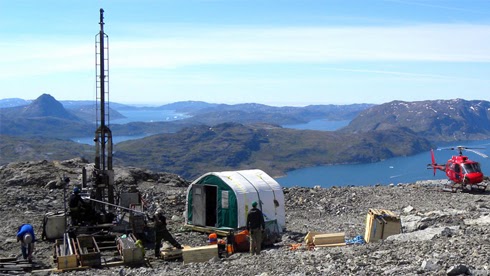
Prospecção de urânio
(www.presseurop.eu)
Aleqa Hammond, primeira-ministra da Gronelândia, saudou o levantamento da proibição relativa às minas de urânio, que durou 25 anos, crendo ser este um grande passo para a independência económica e política face à Dinamarca. O fim da proibição permitirá também a exploração de terras raras, ao mesmo tempo que desafiará o domínio da China, que controla 90% da produção destes elementos.
Aleqa Hammond, primeira-ministra da Gronelândia, saudou o levantamento da proibição relativa às minas de urânio, que durou 25 anos, crendo ser este um grande passo para a independência económica e política face à Dinamarca. O fim da proibição permitirá também a exploração de terras raras, ao mesmo tempo que desafiará o domínio da China, que controla 90% da produção destes elementos.
06 outubro 2013
Cavernas de Gás Natural em Portugal sem Risco Sísmico
Geólogo garante ao Expresso que o armazenamento de gás natural nas
quatro cavernas em Pombal não poderá provocar sismos, tal como está a
acontecer na costa de Valência.

Armazenamento subterrâneo de gás natural em Carriço, concelho de Pombal
Em Portugal existem quatro cavernas onde é armazenado gás natural mas, ao contrário do projeto espanhol em Valência, que terá provocado mais de 20 sismos nas últimas 24 horas, por cá não há esse risco, garantiu ao Expresso o presidente da Associação Portuguesa de Geólogos.
05 outubro 2013
Valência: Sismos continuam junto a armazém de gás

Mais de 20 sismos, incluindo um de magnitude 4,1 na escala de Richter,
registaram-se desde a noite de terça-feira na zona do Golfo de Valência
próximo de um polémico armazém subterrâneo de gás natural instalado nas
costas de Vinarós (Castellón, Espanha).
Dados do Instituto Geográfico
Nacional referem que desde meados de Setembro a zona registou já quase
350 sismos, numa situação que está a suscitar polémica e amplo debate em
torno do futuro do projecto.
01 outubro 2013
Statoil makes ‘significant’ oil discovery off Newfoundland

Norway's Statoil has announced with its Calgary-based partner Husky Energy the discovery of a reservoir of light crude believed to hold between 300 million and 600 million barrels of recoverable oil.
Photograph by: Statoil , ap
10 setembro 2013
Descoberto no Pacífico o maior vulcão do mundo
Com 310 mil quilómetros quadrados e 650 quilómetros de largura, o vulcão está inactivo há 140 milhões de anos.

As setas indicam, sensivelmente, onde foi descoberto o Tamu Massif
Uma equipa de cientistas norte-americanos descobriu debaixo das águas do oceano Pacífico o que considera ser o maior vulcão do mundo, do tamanho das Ilhas Britânicas, publica hoje a revista Nature Geoscience.
07 setembro 2013
Vimioso - Centro Interpretativo das Minas de Volfrâmio
O Centro Interpretativo dedicado às minas de volfrâmio em Argozelo, desactivadas desde a década de 1980, irá contar com uma mostra que reunirá o espólio de antigos trabalhadores e testemunhos dos mesmos, além de outras componentes.

O novo centro vai nascer na cortinha do Calvário, junto a uma das entradas da vila de Argozelo. De acordo com o município "as obras deverão ter o seu início ainda este mês de Setembro".
O novo centro vai nascer na cortinha do Calvário, junto a uma das entradas da vila de Argozelo. De acordo com o município "as obras deverão ter o seu início ainda este mês de Setembro".
14 agosto 2013
Statoil to sponsor "Arctic Race of Norway" cycling event
Statoil has signed an agreement to be the general sponsor
of the Arctic Race of Norway cycling event in northern Norway. This will
be the largest sporting event ever hosted in Norway, measured in number
of television viewers across the world.

Knut-Eirik Dybdal (front) and Ole Skardal are two of the initiators of the Arctic Race of Norway. (Photo: Ivar Hjelvik)
A
four-day stage race, the Arctic Race of Norway will feature some of the
world's top cyclists and will be set against the backdrop of northern
Norway's spectacular landscapes.
This year's event will be
televised to around 100 countries. Statoil has signed a three-year
agreement with the race organisers, and during this time period, all
three of Norway's northernmost counties will host the race.

Anita Andersen Stenhaug, director Norne-Aasta Hansteen, Statoil's Harstad offices
"Northern
Norway is important to Statoil. This is why we want to take part in
promoting and developing the region as an attractive location for
business development. The Arctic Race of Norway will be one of the most
exciting sporting events in the years ahead, and it is only natural for
Statoil to contribute," says Anita Andersen Stenhaug, director Norne –
Aasta Hansteen at Statoil's offices in Harstad.
Local
enthusiasts in the region took the initiative for the bicycle race. For
more than 18 months, they have worked with great passion and belief in
the concept.
This lead to the Amaury Sports Organisation (ASO) -
owners of the Tour de France and the Dakar Rally amongst other events -
seeing the race's potential.
Every year, ASO receives many
similar requests to take part in such events, but they thought the
Arctic Race of Norway would be a unique opportunity, both in regards to
the passion surrounding the event and the fantastic landscapes that
northern Norway has to offer.

Communications director Reidar Gjærum
ASO will handle the logistics surrounding the cycling aspect of Arctic Race of Norway.
"Arctic
Race is an excellent opportunity to showcase what northern Norway has
to offer. At the same time, it can help build Statoil's position in the
region. It is important that we strengthen our position and long-term
business opportunities," says communications director Reidar Gjærum.
"Cycling
is a sport with a major international fan base in markets that are
important to the company, such as Europe. Therefore, after close
consideration, we decided to contribute to the execution of this event.
We must invest in future growth and opportunities, even during times
when we cut costs. We're eagerly awaiting the start of the race in
August," Gjærum says.
Hopefully, Arctic Race of Norway will
inspire even more people to strap on their bike helmets and hit the
road, including Statoil employees. Many will get the chance to see the
star cyclists up close, while millions will follow the race through the
TV broadcasts.
The broadcasts will be televised in prime time
during the afternoons and evenings, thanks to the unique light
conditions in northern Norway in August.
Statoil will contribute a fixed annual amount of NOK 8 million for each of the years of the agreement.
Knut-Eirik
Dybdal, prime initiator and general manager of the Arctic Race of
Norway in Harstad, is grateful for Statoil's involvement.
"Without
Statoil we would be unable to host the Arctic Race. Not only has
Statoil contributed funds through its role as general sponsor, but the
company also contributes invaluable expertise in planning and
execution," Dybdal says.
___________________________________________________________________________
Retirado de:
29 junho 2013
Empresa Mineira Indiana Quer Investir Em Moncorvo
Os indianos da multinacional mineira Zarmin acabam de fazer um acordo com a Companhia Portuguesa de Ferro, que tem uma concessão em Torre de Moncorvo.

A Companhia Portuguesa de Ferro (CPF), que detém uma concessão para prospeção e pesquisa de ferro, numa área aproximada de 40 quilómetros quadrados, no concelho de Torre de Moncorvo, acaba de fazer um acordo com a multinacional mineira indiana Zarmin.
Esta zona de intervenção situa-se ao lado da concessão da Mining Technology Investments, que há cerca de um ano foi cobiçada pelo gigante mineiro australiano Rio Tinto, que se propunha investir 1,8 mil milhões em Moncorvo.
O acordo agora firmado entre a CPF e a Zarmin, segundo o Expresso conseguiu apurar, para já prevê apenas a realização conjunta de trabalhos pesquisa de ferro. Numa fase posterior, quando se passar à exploração, o investimento poderá ascender a 1000 milhões de euros.
Retirado de: Expresso
12 junho 2013
Galp vai explorar gás natural em Alcobaça
A Galp exerceu a opção para se tornar operador na concessão de gás
natural Aljubarrota-3, no 'onshore' português, na zona de Alcobaça.

"As atividades de pesquisa e avaliação realizadas pelo consórcio na
concessão Aljubarrota-3 confirmaram a presença de gás no pré-sal do
prospeto Alcobaça, apesar do poço perfurado em 2012 não ter encontrado o
reservatório", indica a Galp através de um comunicado.
A Galp "exerceu a opção de se tornar o operador da concessão
Aljubarrota-3, localizada no onshore português e que abrange cerca de
121 mil hectares, em conformidade com os termos do acordo de 'farm-in'
assinado com a Porto Energy em junho de 2012", informou a empresa.
Nos termos do acordo, compete à Galp definir a estratégia de
exploração de uma concessão que servirá à petrolífera nacional
aproveitar "o conhecimento e experiência adquiridos pela sua
participação em projetos inovadores a nível mundial", segundo o mesmo
comunicado.
"Para além disso, a Galp poderá desenvolver as capacidades e aumentar
a experiência do seu capital humano, tanto na área de exploração como
na gestão de projetos desta natureza, o que representa uma vantagem
competitiva para mitigar o risco de execução associado a projetos de
exploração e produção", acrescenta o documento.
_____________________________________________________________________________
Retirado de:
07 junho 2013
Opposition grows to Norway's Arctic oil search
By Gwladys Fouché
The seas off the picturesque Lofoten islands could hold 20% of the country's remaining undiscovered oil and gas reserves
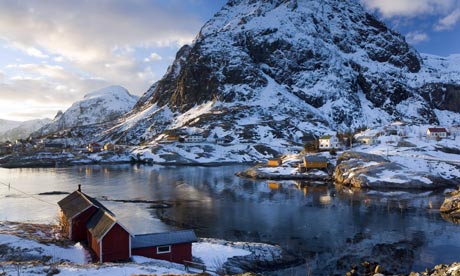
Bay and mountain at sunset at Tind, one of Lofoten Islands in Norway
Photograph: Peter Adams/Peter Adams
Perched 200km north of the Arctic Circle, the Lofoten islands in Norway
paint a picture-perfect image of serenity. High mountains plunge into
the sea, villages of brightly painted wooden houses nestle on the shores
of sheltered bays, while fishing
boats pull gently on their anchors. But underneath the surface, the
Lofoten islands are the latest battleground for the right to exploit the
polar region's oil and gas resources, with local fishermen and environmentalists hoping to defeat a multibillion pound industry.
As
Norway's oil reserves in the North Sea are emptying – the country is
the world's fifth largest oil exporter – it is now looking to the Arctic
north in search of new oil riches. And the Lofoten islands appear
promising. Between May and September, Norway's state oil agency will be
mapping the seabed outside the archipelago in search of hydrocarbon
deposits, as it already did in 2008.
"We expect the area to
hold 20% of all remaining undiscovered reserves on the Norwegian
continental shelf," explained Odd-Ragnar Lorentsen from the Norwegian Petroleum Directorate (NPD).
This
view is shared by the oil companies, which are not currently allowed to
explore in the region. "There is a potential for oil and gas off the
Lofoten," said Oerjan Birkeland, exploration manager for the Norwegian
oil company StatoilHydro. "We would like the region to be opened [for drilling]. We must have the ability to explore."
But
not everyone is welcoming a potential oil boom in the region. The
fishing industry, which has dominated the economy of the region for the
past millennium, fears oil activity could endanger the Barents Sea cod,
the largest cod stock in the Atlantic Ocean, which spawns off the coast
of Lofoten in February-March and is a highly profitable fisheries.
"I
am absolutely against searching for oil and gas in the Lofoten area,"
said a visibly angry Rolf Arne Jacobsen, a 52-year-old fisherman, in the
port of Svolvær. "It would be a catastrophic development that would
endanger both the fisheries and nature."
Surveying has
already been killing off fish stocks. To map the seabed, scientists
shoot out an air pulse at high pressure that rebounds on the seabed,
killing any small fish within a 10-metre radius. "The dead fish float on
the surface after the surveying ships have done their research,"
claimed Jacobsen. And it is not known what effects the surveying has on
the surviving fish. In some regions, 2008's catches of hake are a tenth
of what they were on 2007's – and the fishermen blame the seismic
surveys.
The tourism industry is also up in arms, as
Lofoten is one of Norway's top tourist destinations, with travellers
flocking to admire its flora and fauna. "Lofoten would be a less
attractive destination," said Heike Vester, who runs marine safaris from
the port of Henningsvær.
Vester is afraid that oil
installations, such as offshore platforms, pipelines and other on-land
installations would damage the pristine nature and kill her business.
"When I tell my customers what's going on, they tell me they don't want
to come back," she said.
Environmentalists also have huge
concerns for the fragile Arctic environment. "There are even more storms
here than in the North Sea, and during the winter there is only
daylight for three to four hours per day [making cleaning operations
more difficult]," said Maren Esmark, head of conservation at WWF-Norway.
"An oil spill would have more dramatic consequences, especially since
the areas that are being surveyed are very near the coast."
However,
not everyone is opposed to the idea. "We just can't live off tourism
and service jobs, we need other types of jobs too," said Brita Malnes,
who owns a cornershop in Henningsvær. "If oil and gas mean we could get
jobs, then it would be good. But at the same time it should not destroy
the nature around here."
Public information meetings for
Lofoten's 23,500 inhabitants last year have been tumultuous. "In 30
years of working in the oil industry I have never seen such reactions,"
said Lorentsen. "At one meeting, a grandmother was in tears because she
thought we were going to put her grandson, a fisherman, out of work…
People are scared and we should understand that."
Part of
Lorentsen's surprise is that this is a country that has grown fabulously
wealthy on the oil industry. Thanks to the North Sea's resources,
Norway boasts one of the world's largest GDP per capita (about $55,669
or £38,242 in 2008, compared with the UK's $35,070).
But it
is precisely the North Sea's declining reserves that are driving the
search for oil in the north. Oil production peaked in 2001, and "by
2023, it will have reduced by 50%," said Birkeland. "The way forward is
to increase recovery from existing fields and increase exploration."
Already
one gas field, Snow White, is being exploited in the Norwegian side of
the Barents Sea, with oil companies discovering new fields every year.
StatoilHydro alone has drilled 21 wells and made 14 discoveries. "We made two finds just in 2008," said Birkeland.
Another company, the Italian oil group ENI, is hoping to get the right to exploit the Goliat oil field in the Barents Sea.
Politicians
are divided about the way forward. In the cabinet coalition, the
Socialist Left party is opposed to oil exploration around Lofoten, while
the dominant partner, Labour, is broadly in favour. Similarly, in
opposition, the Christian Democrats and the Liberals oppose it while the
Conservatives are in favour. Oil exploration in the Lofoten is already
set to be one of the top issues of September's general election.
The
Norwegian parliament is to decide in 2010 whether to open up the
Lofoten to oil exploitation. And in the meantime surveying activities
off the coast of the archipelago will continue.
____________________________________________________________________________
Retirado de:
15 março 2013
Forests and Caves of Iron: An Amazon Dilemma
by David Shukman (Science Editor - BBC News)
 |
In the heart of the Amazon rainforest in Brazil,
giant diggers tear into the rock 24 hours a day to extract a dark grey
ore rich in the iron on which every modern economy depends.
The Carajás complex is the largest iron ore mine on the
planet and at any one time 3,000 people are toiling here in the tropical
heat using a fleet of giant machines including trucks the size of
houses.
Amid an ocean of lush green jungle, a series of four manmade
chasms stretching deep into the rock represents an ugly first step in
the long process involved in making steel.
The company operating the mine, the Brazilian giant Vale,
often criticised for causing environmental devastation, claims it is
planning to restore this landscape to its original state.
The conundrum of Carajás is that we all make use of steel but that comes at a price to the natural world.
Constant struggle
This is the source of a constant struggle between Vale's
desire to reach new seams of ore and attempts by the environmental
authorities to keep the expansion under control.
It is also at the core of the debate on sustainable development at the Rio+20 summit under way this week.
I reported on a similar contest in the UK last week, over plans for the expansion of Lydd Airport in Kent close to the wildlife reserve of Romney Marsh.
The iron rush here at Carajás was only triggered by a chance discovery.
An American geologist, whose helicopter needed refuelling at
Carajás in 1967, reputedly bent down to retie a shoelace and noticed the
Amazonian soil littered with chunks of rich ore.
The lumps he found here, almost as black as coal, are
surprisingly heavy - I picked one up - because this ore has one of the
highest iron contents anywhere in the world.
Huge operation
Nearly half a century later, the mine processes a staggering
300,000 tonnes every day and last year generated an immense total of 109
million tonnes - snapped up by the fast-industrialising economies of
Asia.
At first sight the mining operation appears breathtakingly destructive.
For a start the mine is smack in the middle of a National
Forest and what was once a landscape of dense vegetation is a now a
moonscape of bare cliffs and billowing dust.
The whoops and cries of jungle birdsong are replaced by the constant roar and grind of hundreds of massive engines.
But Vale, like most multinationals these days, is eager to
promote the idea that sustainability is embedded in its thinking and
points to a series of measures designed to limit the mine's impact.
The operations manager of the mine, Jaymilson Magalhães, tells me
that the mine complex only covers about 3% of the area of the national
forest and that before any digging can start, the company has to have a
restoration plan to return the area to its original state.
That includes using spoil to fill in the mines once they are
exhausted to reshape the topography - a process we witnessed in one
small area - and undertake a massive replanting programme using native
species.
"I believe we genuinely can restore the forest and we have a strategy to do that," Jaymilson tells me.
"What we do is very careful planning so that when we finish
we know exactly the plants we need to replant and we have nurseries with
the original vegetation.
"When we grow them we will reposition the soil so the forest can grow back to its original state."
 |
| The area is one of great natural beauty |
Trying to be green
Vale also highlights its support for an extensive monitoring
operation in the forest run by the Brazilian Government's conservation
agency ICMBio - so we checked with the agency to get their perspective.
Frederico Drumond Martins of ICMBio is the manager of the
national forest and agrees that Vale is trying to be greener - for
example, he says, he only has 12 rangers but Vale pays for a further 80,
plus cars, boats and the use of a helicopter, all vital to guard
against illegal logging and poaching.
"Vale is really trying to operate sustainably but there's a
long way to go - for Vale the iron comes first and Nature second or
third."
Frederico and his colleagues are locked in a series of disputes with Vale over its plans for new mines in the forest.
"My job," he tells me, "is not to stop the mining - it is
good for the economy and it puts Brazil in a good position in the world -
but it is to control it."
Precious caves
One of his greatest concerns is to preserve a surprising and
recently discovered world beneath the Amazon - a series of caves lurking
in the iron ore under the forest floor.
In this one region, some 2,000 caverns have been found and
scientists regard them as potentially precious features because of their
iron content, unusual biology and archaeological remains.
A cave we descended into hosts four species of bat - only one
of them carnivorous, luckily - and excavations in its floor have
revealed evidence of human habitation as long as 9,000 years ago.
The air inside was cool and musty and there was a constant squeaking from the bats as they fluttered above our heads.
ICMBio and Vale are surveying the caves to rank their importance -
only those granted the highest grade will be saved from mining while
some may be destroyed if others are preserved.
The status of the cave we visited has yet to be decided so its fate is unclear.
 |
| The caves are thought to contain unusual biology |
It lies within a zone identified for potential mining by Vale
but any bid to start digging will require a lengthy planning battle.
The rainforest is under assault from a variety of sources
and, compared to soya planting and cattle grazing, iron ore mining
causes relatively minor damage.
And there's an irony: the vehicles used by the conservation
rangers around are made with steel that may have had its origins in this
very landscape.
Expansion of the mines would create new jobs and lead to
valuable exports. An informal estimate of one planned project is that
the ore could yield, at current prices, a staggering $800bn.
Set against that is a growing awareness of the uniqueness of
the forest, not only with the ecosystems thriving within and below its
canopy, but also a dark and largely unknown realm under the forest
floor.
As Frederico of ICMBio puts it: "The iron is for this generation but the forest is for the next generation."
As the host of the Rio+20 summit this week, Brazil faces its
own difficult choices over how to define the much-disputed phrase
'sustainable development' and what it means for the jungles and caves of
the Amazon.
_____________________________________________________________________________
Retirado de:
23 outubro 2012
Geologists on the wrong side of the law
We live in a litigious society. Engineering and environmental
geologists are no strangers to the legal system. They frequently deal
with issues relating to geologic hazards such as active faults and
unstable ground, the release of contaminants into the environment and
numerous other circumstances. But for the most part, geoscientists tend
to avoid legal battles. Is that changing?
In the last couple of years, several events have brought geologists
into new legal territory. Geologists have recently been accused of
potentially inducing earthquakes, of not predicting natural hazards, of
potentially adversely impacting water quality, of spying and of engaging
in indelicate e-mail discussions and alleged misdealings with climate
change data.

Many of L'Aquila's buildings were reduced to rubble during the April 6 earthquake
(Credit: INGV)
Are geologists at fault?
On more than one occasion in the pursuit of energy, geologists have
been cited for inducing earthquakes. First was a case of enhanced
geothermal development in Switzerland that came to a head last December.
Enhanced geothermal essentially fractures bedrock and then circulates
water through the cracks to produce steam, which in turn is utilized to
produce electricity. However, by its very nature, fracturing creates
earthquakes, albeit mostly of small magnitude. Last year, a case was
brought against geologist Markus Haring for inducing some 30
earthquakes, the largest a magnitude 3.4, through drilling and injecting
pressurized water into rocks 5 kilometers below the surface to generate
electricity. Damage to buildings in the region was estimated at $9
million. Although Haring was acquitted last December, the enhanced
geothermal project was terminated.
The Swiss case had significant ramifications, and sent a shot over
the bow to those in favor of enhanced geothermal, considered a clean and
virtually limitless energy source. In the U.S., the Department of
Energy had provided more than $100 million for enhanced geothermal. One
of the big projects was the AltaRock Energy project in an area called
The Geysers, about 160 kilometers north of San Francisco, Calif. The
Geysers comprise the largest complex of geothermal power plants in the
world, and supply one-fifth of the renewable energy produced in
California. The AltaRock project is — actually was — President Obama’s
first major test to advance geothermal energy generation.
But in December 2009, immediately following the shutdown of the
project in Switzerland, AltaRock Energy removed its drill rig and
informed the government that the project would be abandoned. The
Geysers’ geothermal fields are lined with active faults, and minor
earthquakes have been induced by the geothermal operations there; it
appears that the potential reward just wasn’t worth the risks for
AltaRock. The liabilities associated with the subsurface fracturing of
rock present a significant setback in our search for renewable energy.
Thus the efforts for more renewable energy will obviously be hampered
and derailed with these legal setbacks.
Geothermal isn’t the only form of energy under attack. Another recent
case centers on whether drilling a natural gas well caused four small
earthquakes — none above magnitude 2.8 — in the vicinity of Cleburne,
Texas, near Dallas-Fort Worth. It did not help that one of the
earthquakes occurred during the meeting of the city council while the
council was holding an emergency session to discuss this very topic.
This part of the Lone Star State had not had an earthquake in its
140-year history. The alleged culprit is either a practice called
fracking — which is the injection of water, with added chemicals, at
high pressures in order to fracture the underlying shale layers and
release natural gas trapped in the rocks — or the reinjection of
wastewater back into a depleted well, which is what one study found, as EARTH reported in June.
For now, gas production continues in Texas, but this issue and the
issue of how fracking affects groundwater are in the headlines
elsewhere, including in Pennsylvania, New York and other parts of the
Northeast. As of 2005, fracking was deemed exempt from federal
regulation under the Safe Drinking Water Act, but renewed interest on
the impact of fracking on water quality is being re-evaluated by the
Environmental Protection Agency. We haven’t heard the end of this issue.
The question of whether geologists can be held responsible for
inducing earthquakes is a bit different from the question that arose in
Italy late last spring: Can a geologist be held liable for not predicting an earthquake or any other natural hazard that occurs? Italian geologists, seismologists, volcanologists, engineers and the like were threatened with charges of manslaughter for failing to predict the magnitude-6.3 earthquake in L’Aquila
on April 6, 2009. The following statement was provided by the Major
Risk Committee, an advisory group to the Civil Protection Agency, in
reference to tremors that preceded the April 6 seismic event: “The
scientific community tells us there is no danger, because there is
ongoing discharge of energy.” This was followed by such statements as “a
major earthquake in the area is unlikely but cannot be ruled out” and
“Because L’Aquila is in a high-risk zone it is impossible to say with
certainty that there will be no large earthquake.”
Whether these and other statements offered prior to the earthquake
were adequate, appropriate or sufficient became questionable in the eyes
of blind justice. Do the Italian geologists deserve to be under
investigation for manslaughter for failure to forecast the earthquake?
My opinion: No. We will see how it plays out in the courts.

A series of small earthquakes that shook up the Dallas-Fort Worth area
may be linked to natural gas production in the nearby Barnett Shale
(Credit: iStockphoto.com/Veni)
Are geologists the new James Bond?
Last summer, American geologist Xue Feng was sentenced to eight years in a Chinese prison
for alleged oil espionage. Apparently Feng received documents on the
geological conditions of onshore oil wells and a database on some 30,000
oil and gas wells. The wells belonged to China National Petroleum
Corporation and listed subsidiary PetroChina, Ltd. Feng’s behavior was
not unusual, except that China contends that the information was
obtained illegally and allegedly sold to IHS Energy, a U.S. consultancy
firm and Feng’s employer. On July 5, 2010, China ignored a personal
appeal from President Obama and sentenced Feng to prison for buying
confidential information about China’s oil industry. Feng was also fined
$30,000 for attempting to obtain and traffic state secrets.
But regardless of the eventual outcome — assuming China has an appeal
process or can be persuaded by Feng’s supporters to reconsider its
verdict — there is little doubt that we will be seeing more of this type
of behavior as certain countries and companies become ever more
aggressive about obtaining available resources and supply lines to
fulfill their growth and expansion plans. The Feng incident, which
dragged on in the courts for more than two and a half years, also sent
warning signals to foreign businesses that may not be familiar with
security laws germane to other countries and jurisdictions.
Despite China’s displeasure with Feng’s alleged misbehavior, China
was alleged to be behind several spying events of its own, in the form
of cyber-attacks. Last January, the Christian Science Monitor reported
that at least three U.S. oil companies — Marathon Oil, ExxonMobil and
ConocoPhillips — were the target of a series of previously undisclosed
cyber-attacks. There is a growing level of sophistication in the global
war of Internet espionage. These new types of attack include custom-made
spyware that is virtually undetectable by antivirus and other
electronic defenses traditionally used by corporations. These new
cyber-burglary tools pose a serious threat to corporate America and the
long-term competitiveness of the nation, according to experts in this
field. We will need to stay tuned for the sequel in these unfolding
cyber-spies reports.
And in the realm of cyber-spying, there was Climategate,
although the emphasis has not been on the cyber-thieves who stole the
information but rather the information itself. Late in 2009, hackers
released a thousand private e-mails written by prominent climatologists.
The case threatened to discredit the Intergovernmental Panel on Climate
Change’s Fourth Assessment Report, and threatened the integrity of the
scientific process as a whole. The e-mails exposed the hyper-political
nature of the debate on climate change, and caused the general public to
be more confused than ever. In the past year, a series of independent
reviews of the e-mails and of the situation has cleared the climatologists of any real legal wrongdoing,
but damage to the integrity of climate science remains. Interestingly,
the cyber-thieves appear to have made their getaway without legal
repercussions.
Amid the ongoing pursuit of resources and clean energy, as well as
public perception on what we do or don’t know, we will undoubtedly see
more geologists involved in legal wrangling in the future. Thus, what we
do, how we do it, how we document it and how we relate it to the public
becomes increasingly important.
Stephen Testa (Publication Date: Friday, December 3, 2010)
_______________________________________________________________________
Retirado de:
http://www.earthmagazine.org/article/voices-geologists-wrong-side-law
Terramoto de Áquila: Quando a ciência é condenada

Sentença chocante. É assim que a maior parte da imprensa transalpina
qualifica o pesado veredicto aplicado aos seis cientistas que falharam a
avaliação de risco do terramoto de L'Aquila, em 2009.
O tribunal de Abruzzo considerou que os cientistas subestimaram os
riscos do terramoto de 6 de abril de 2009 que matou mais de 300 pessoas
no centro de Itália.
A opinião pública é unânime em considerar exageradas as penas de seis anos de prisão porque é “impossível” prever um terramoto.
Há quem receie que, com esta sentença, se abra um precedente, porque
se os “cientistas tiverem de prever a morte e a destruição, vão deixar
de trabalhar”.
A justiça aplicou uma pena de seis anos de prisão aos cientistas e a
um ex-responsável da proteção civil. Os condenados terão ainda de
indemnizar as vítimas em mais de 9 milhões de euros.
Se a condenação dos cientistas parece despropositada, são muitos,
por outro lado, os que querem sentar banqueiros, agências de rating,
políticos e economistas no banco dos réus por terem falhado redondamente
nas previsões económicas, provocando o sismo social que a Europa está a
atravessar.
_________________________________________________________________________
Retirado de:
Subscrever:
Mensagens (Atom)